For large-scale solar projects across Australia, the central challenge is shifting from how much capacity can be built to how that capacity operates once connected to the grid. Rising curtailment, persistent negative daytime pricing, and more demanding connection requirements are forcing developers to reconsider system architectures in addition to the project size. In response, attention has turned to battery-centric DC coupling as a way to improve performance, reduce losses, and better align solar generation with market value.
Battery-centric DC-coupled systems place the battery and its inverter at the centre of the design while using DC/DC converters, such as String Optimizers, to manage power from the PV array. These designs are being adopted by developers to improve grid interaction, increase system performance, and reduce costs. While AC-coupled and other DC-coupled designs account for the majority of operating assets in the NEM, system owners are reassessing these architectures as grid and market conditions evolve.
To get better insight into this shift, Giles Parkinson sat down with Russell French, Country Director – Australia at Ampt; Rob Mailler, Director at Kinelli; Glenn Clark, Grid Connections Director at Power Electronics; and James Larrett, Director at Solpod and Fresh Start Energy.
From Standalone Solar to Hybrid by Necessity
Peak solar power generation coincides with the lowest-priced periods and curtailment is becoming more common as network constraints tighten. Together, these conditions erode revenue by forcing energy into low- or negative-price windows and limit how much generation can be exported. Integrating storage allows that energy to be captured and shifted into higher-value periods, while reducing exposure to curtailment
As a result, utility-scale solar is being designed as an integrated solar-plus-storage system rather than a standalone asset. Projects that do not incorporate storage from the outset are finding it harder to secure financing.
With DC-coupled storage, developers can shift energy delivery into higher-value periods and make better use of limited grid connections. “We can’t really effectively do large-scale solar by itself anymore,” says Rob Mailler, Director at Kinelli, a solar and storage development advisory firm, “Adding storage to those projects, you can solve that economic conundrum.”
Among the available approaches, battery-centric DC-coupled designs are a leading option based on their technical and economic characteristics.
The Fundamental Appeal of Battery-Centric DC-Coupled Design
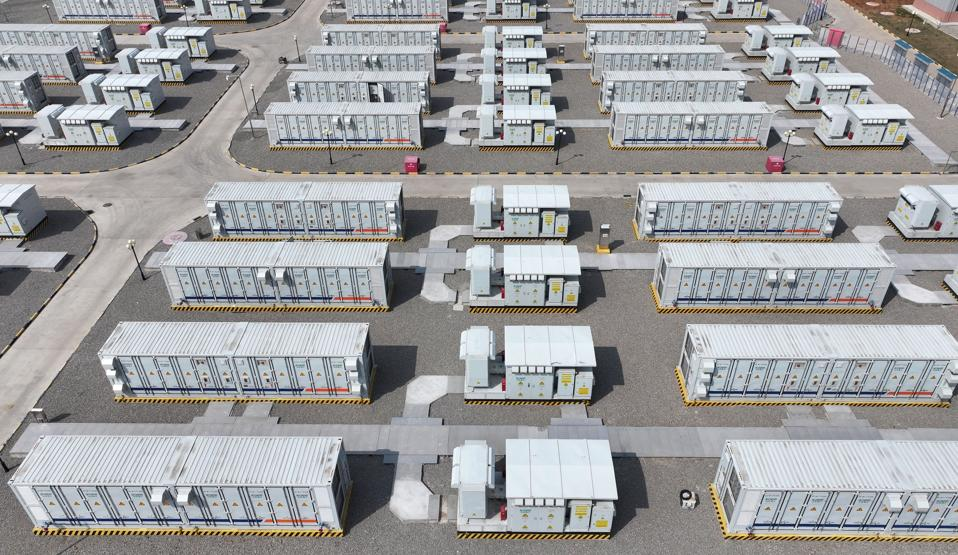
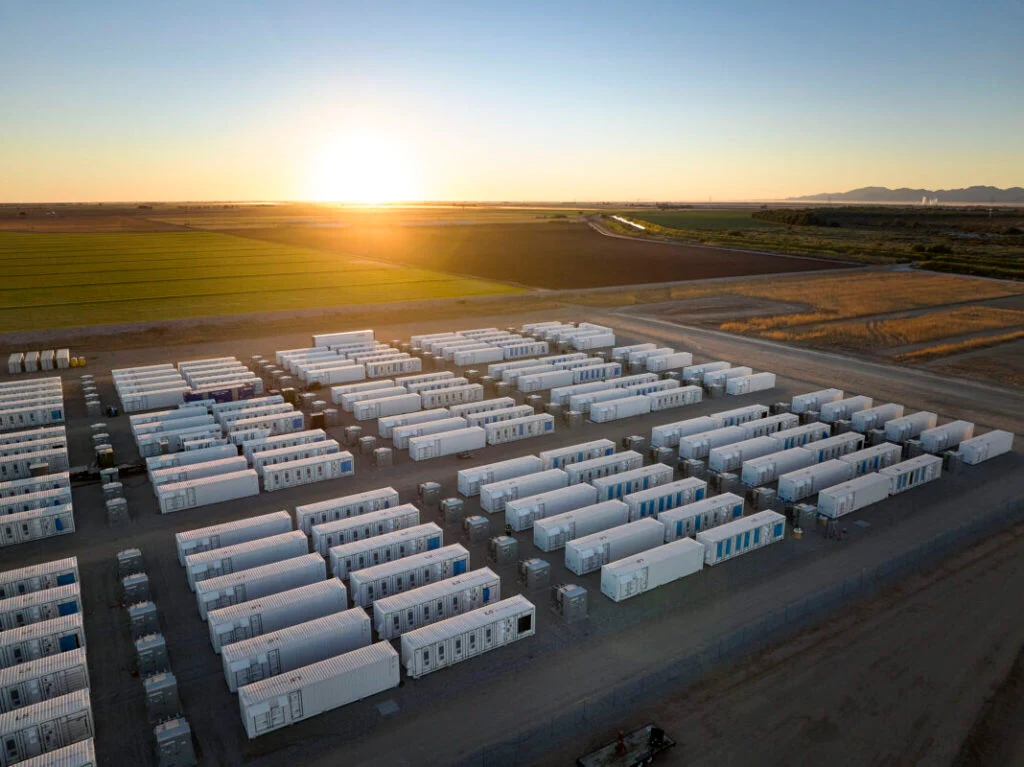
PV-plus-storage power plants with a battery-centric, DC-coupled design retain the core architecture of a standalone battery energy storage system (BESS), which has a battery connected to a bi-directional, grid-forming inverter.
The PV system connects directly to the shared DC bus between the battery and its inverter. It does so using DC/DC converters—such as String Optimizers—deployed in the PV array that deliver full available power while following the battery state of charge (SoC). This also isolates the DC bus from PV voltage variability to allow the PV-plus-storage power plant and allows the system to operate with the operational advantages of a standalone BESS rather than a solar generator.
“What you have from the grid’s perspective is a battery facing the grid,” Mailler explains. “It’s supported by a battery with a very stable DC voltage. The solar comes in from the side.”
Harmonics, Stability, and the Connection Process
The grid connection process remains a significant source of project development costs and delays. In AC-coupled plants, the PV system and the BESS each have their own inverter and medium-voltage transformer which export power directly to the grid. With multiple grid-facing inverters there are higher harmonic emissions and a wider range of operating conditions that must be assessed through time-consuming and expensive grid studies.
In battery-centric, DC-coupled systems only the battery inverter faces the grid and the number of interacting devices is reduced. “When you’re charging your battery, there are no harmonic emissions going onto the grid,” Mailler says. “With AC-coupling, you’re maximally harmonically noisy at that time.”
Glenn Clark, Grid Connections Director at Power Electronics, an inverter manufacturer, says this makes battery-centric systems easier for network operators to assess. “These designs are good citizens in the network,” Clark says. “They supply very valuable services, and they reduce the complexity of the connection process.”
Why Longer-Duration Storage Favors DC Coupling
Four-hour batteries are common in existing deployments but only cover a short evening peak demand. As demand for longer storage durations increases, system owners are incentivised to charge batteries during periods when low grid prices and peak PV generation coincide.
Battery-centric DC-coupled systems allow charging from both the PV and the grid, increasing the volume of energy captured within the same time period. “If you want to go long duration,” Mailler says, “you’ve got to go DC coupling.” By contrast, AC-coupled systems are constrained by the size of the interconnection.
Russell French, Country Director – Australia at Ampt, which manufactures DC/DC String Optimizers, identified this capability as a priority for power plant developers. “Long-duration storage is going to be the future,” French says. “We need assets that are rapidly deployed, lowest cost, highest efficiency.”
Implications for Site Selection and Layout
The shift to hybrid designs is changing how projects are developed. “You begin with the grid connection and look at optimising what you can connect at that location,” says James Larrett, Director at Solpod and Fresh Start Energy. “That’s really around the battery.”
This approach allows developers to focus on increasing total energy delivered rather than maximising peak output. By prioritising energy yield over time, sites that were previously overlooked—such as non-flat terrain unsuitable for trackers—become viable, and denser fixed-tilt east–west layouts perform more competitively when paired with storage.
“It’s not megawatt-hours per megawatt peak we’re after,” Larrett says. “It’s megawatt-hours per hectare.”
Designing for the Grid Ahead
Battery-centric hybrid designs are shaping utility-scale solar-plus-storage projects, with their advantages becoming more pronounced as congestion and curtailment increase and project economics favor longer-duration storage.
Battery-centric designs are being used in systems ranging from five to hundreds of megawatt interconnections. Panel participants are collaborating on a 400 MW / 1.6 GWh battery-centric DC-coupled project in Queensland.