Global long-duration energy storage (LDES) installations exceeded 15 GWh in 2025, a 49% year-on-year increase. However, according to Wood Mackenzie’s latest Long Duration Energy Storage Trends report, the sector is facing growing challenges due to declining investment and increasing competition from lithium-ion batteries.
Compressed air energy storage (CAES), thermal storage and vanadium redox flow batteries (VRFB) accounted for 45%, 33% and 21% of 2025 installations respectively. China continues to dominate, representing 93% of cumulative global deployment, driven by strong government policy support including provincial mandates and the Special Action Plan for Development of New Energy Storage (2025-2027).
“Despite impressive installation growth last year, LDES technologies are caught in a strategic squeeze,” said Jiayue Zheng, managing consultant, energy storage at Wood Mackenzie. “Lithium-ion batteries have captured the economically critical four to eight-hour storage market through superior cost and supply chain advantages, while the LDES lacks sufficient demand and pricing mechanisms to achieve commercial viability.”
Net zero goals required significant longer energy storage duration
Under Wood Mackenzie’s net zero scenarios, the global average energy storage duration must increase from 2.5 hours to around 20 hours. As countries like Germany, Australia, and Denmark push for variable renewable energy beyond 50% by 2030, wider deployment of LDES will be critical for grid reliability.
However, LDES comprises for only 6% of 2025 global energy storage installations. While lithium-ion battery projects typically average for 2 hours of storage, VRFB and CAES averages about 4 hours and thermal storage around 8 hours.
The report highlights the revenue certainty is strongest in the UK, Italy, the US and Australia, with technology-specific procurement also emerging in markets like Spain, Ireland and Germany. However, most markets lack capacity mechanisms, and multi-day arbitrage alone cannot justify LDES investment.
Investment drought threatens sector viability
According to the report, global funding for LDES declined by 30% year-on-year in 2025, excluding the United States Department of Energy’s US$1.76 billion commitment to Hydrostor. Venture capital investment fell even more sharply, dropping by 72% and placing increasing financial pressure on a growing number of LDES start-ups.
Between 2021 and 2025, only 3 companies Hydrostor, EOS Energy and Form Energy, raised over US$1 billion in funding each, collectively raising over US$4 billion. However, even well-funded companies continues to face significant financial challenges.
The report attributes the difficult investment environment to several factors, including persistently high interest rates that make long-payback LDES projects less attractive, intensifying capital competition from rapidly expanding AI data centres and grid infrastructure investments, and declining lithium-ion battery prices that are narrowing the economic advantage of LDES technologies.
Cost gaps persist despite technology advances
In China, 4 hour lithium-ion battery projects cost US$107/kWh, while thermal energy storage and CAES, the least expensive LDES options cost US$190/kWh and US$201/kWh respectively, representing cost premiums of 78% and 88%. These cost differentials limit LDES competitiveness in shorter-duration markets.
“VRFB project costs are projected to fall by over 30% by 2034 but will still be about 240% higher than lithium iron phosphate battery projects for 4 hour duration,” said Priya Shrivastava, research manager, energy storage supply chain at Wood Mackenzie. “The dramatic cost reductions lithium-ion achieved over the past decade will be difficult for emerging LDES technologies to replicate.”
Market outlook through 2034
Wood Mackenzie expects lithium-ion batteries to hold 85% share through 2034, with VRFB and CAES capturing just 5% and 3% respectively. Meanwhile, the sectors faces a critical challenge: lithium-ion manufacturers have expanded into long-duration products, effectively dominating the 4 to 8 hour storage market through superior cost competitiveness and established supply chain networks exceeding 1,000 GWh of capacity. Demand for multi-day storage segment remains limited, as 2-8 hour systems already cover 90% of storage needs with multi-day discharge events occurring fewer than 10 days per year in most regions.
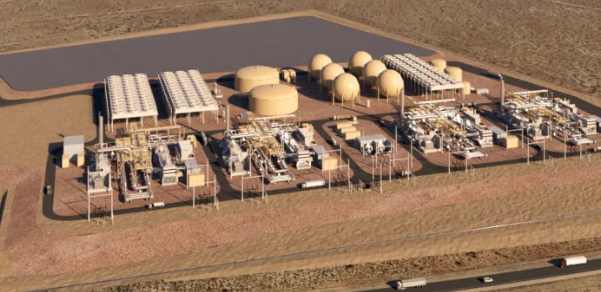
Most large-scale LDES projects from leading manufacturers are under development globally, including Highview’s 50 MW/300 MWh liquid air energy storage project in the UK, Energy Dome’s 20 MW/200 MWh CO₂ battery in Italy, and multiple gigawatt-hour scale CAES and thermal projects across China. But moving from demonstration to commercial scale deployment will remain challenging without key market design reforms.