Construction has fully resumed at the 350MW tower concentrated solar power (CSP) project in Golmud, with on-site activity ramping up as of March 13. Workers have returned to full capacity, and construction machinery is operating at scale, marking a strong start to the 2026 construction phase.
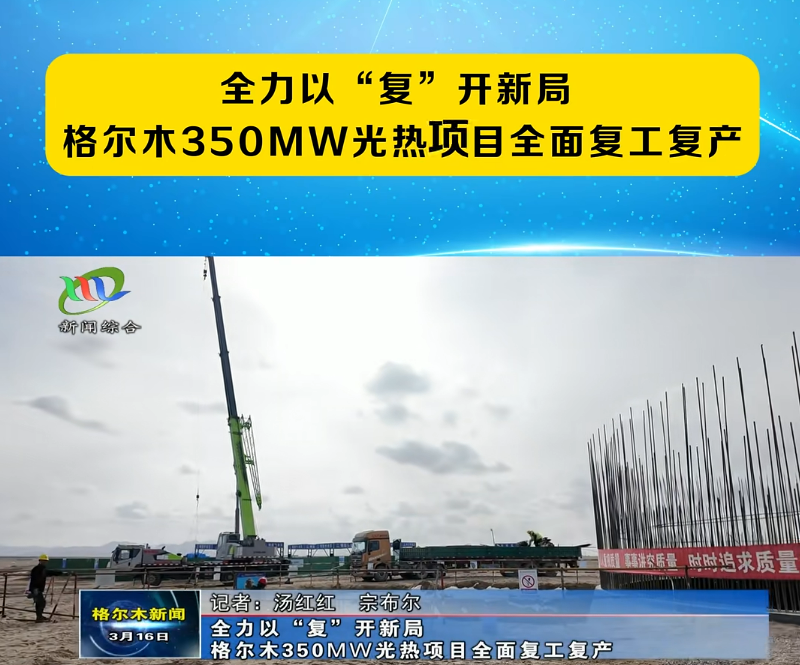
To ensure safe, efficient, and orderly execution this year, the project management team of Cosin Solar Technology Co., Ltd. (Cosin Solar) carried out early-stage planning and detailed coordination. As the core technology and equipment provider, Cosin Solar is deploying its self-developed fifth-generation high-precision intelligent heliostat system, featuring high tracking accuracy, fast installation, and reduced maintenance costs.
With improving weather conditions, heliostat field installation is expected to accelerate significantly, laying a solid foundation for subsequent large-scale grid connection.
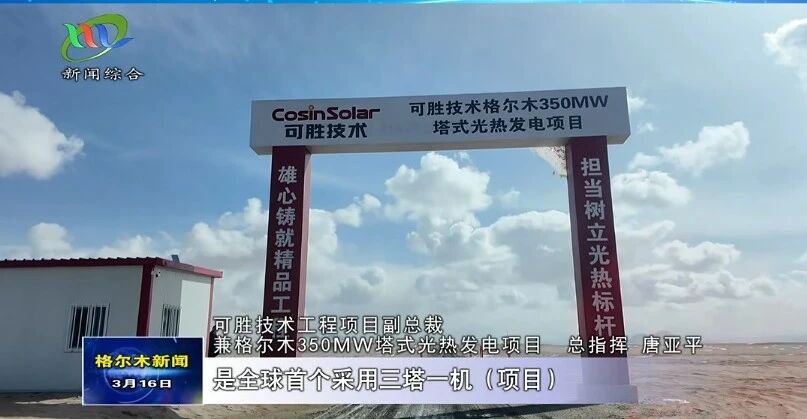
According to Tang Yaping, Vice President of Engineering Projects at Cosin Solar and Chief Commander of the Golmud project, the 350MW plant is the world’s first CSP project to adopt a “three towers with one turbine” configuration. The total investment is approximately RMB 5.4 billion, with an expected annual power generation of 960 GWh. Construction began in October last year, and the three solar towers have already completed foundation works up to ground level.
Following the full resumption of construction on March 13, the project aims to complete major civil works by September 2026, after which it will transition into the electromechanical installation phase.
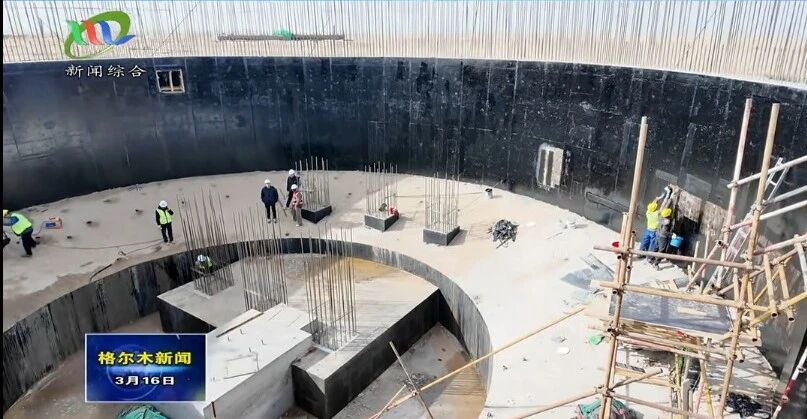
Located in the Wutumeiren solar-thermal and PV hybrid park in Golmud, Haixi Mongolian and Tibetan Autonomous Prefecture, Qinghai Province, the project is one of the largest tower CSP plants under construction globally in terms of single-unit capacity. It adopts Cosin Solar’s fully proprietary molten salt tower CSP technology and incorporates multiple technological innovations.
The project features a “three towers with one turbine” design, equipped with a 14-hour molten salt thermal energy storage system and a heliostat field covering approximately 3.3 million square meters. Grid connection is scheduled for September 30, 2027.
Once completed, the project is expected to significantly increase the share of clean energy in the region, optimize the local energy mix, and contribute to China’s dual carbon goals.