The US Department of Energy’s (DOE’s) Pacific Northwest National Laboratory (PNNL), located in Washington, has begun fire testing utility-grade batteries at the new Grid Storage Launchpad GSL.
At GSL, researchers have the ability to test and validate batteries up to 100kW, gaining valuable insights into how grid-scale batteries can “help support a reliable, affordable and secure electrical grid.”
PNNL notes that researchers have been limited to testing battery systems below 10kW, which generally do not include the advanced controls and complexity found in larger systems. Construction of the facility began in 2022, with the cost quoted at US$75 million at the time.
A dedication ceremony was held in August 2024 to inaugurate the Grid Storage Launchpad GSL, with PNNL stating that the test centre would be “uniquely equipped” to test, validate, and accelerate the development of battery technologies.
GSL’s 100kW testing capability allows for the testing and validation of new technologies at a scale suitable for grid-scale applications.
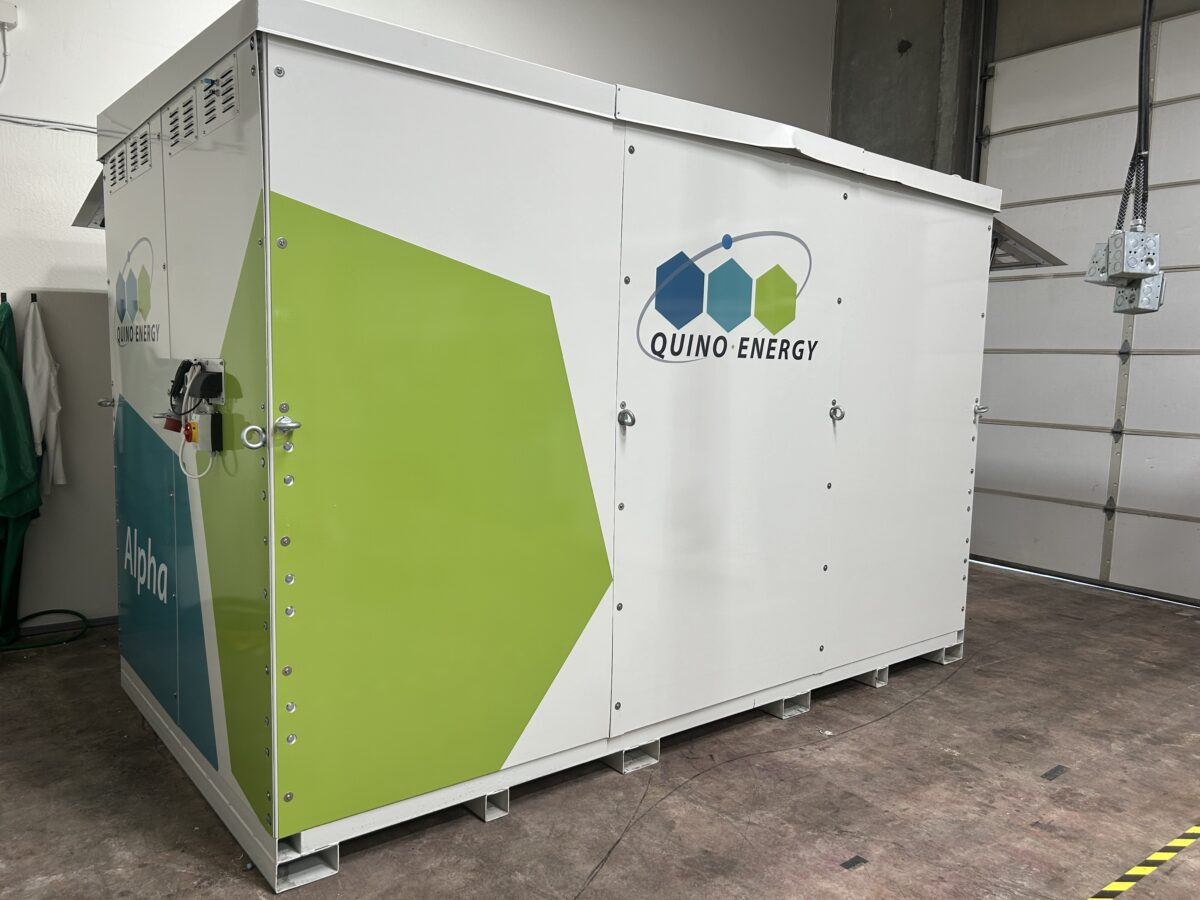
The first round of battery testing will centre on a vanadium redox flow battery (VRFB) built by Invinity Energy Systems.
Flow batteries use a liquid electrolyte that moves through a cell stack to charge and discharge. Storing the electrolyte in separate tanks can make the battery easier to scale.
In July, Invinity said that partnering with Chinese vanadium electrolyte and battery product manufacturer Guangxi United Energy Storage New Materials Technology Limited (UESNT), would enable the company to significantly reduce the cost of its VRFB technology.
Over the next year, Invinity’s battery will undergo thorough testing in real-world conditions, for example, its ability to provide peak shaving services.
GSL researchers also highlighted the ability to test a battery’s ability to provide frequency regulation.
The grid operates on alternating current, meaning electrical current flows in two directions at a set frequency. In the US, this frequency must stay at 60 hertz. Any disruptions can lead to equipment damage or blackouts. Batteries can rapidly supply electricity, making them crucial in avoiding sudden power outages for users.
In June, the North American Electric Reliability Corporation’s (NERC’s) 2025 State of Reliability report found evidence suggesting that BESS can improve primary frequency response.
The report noted that BESS in the Texas and Western interconnections “are contributing to improvements in frequency control and frequency response.”
GSL announced that it will soon open its testing services to a broader audience, inviting industry players and battery manufacturers to apply for independent testing and validation of their grid-scale technologies.