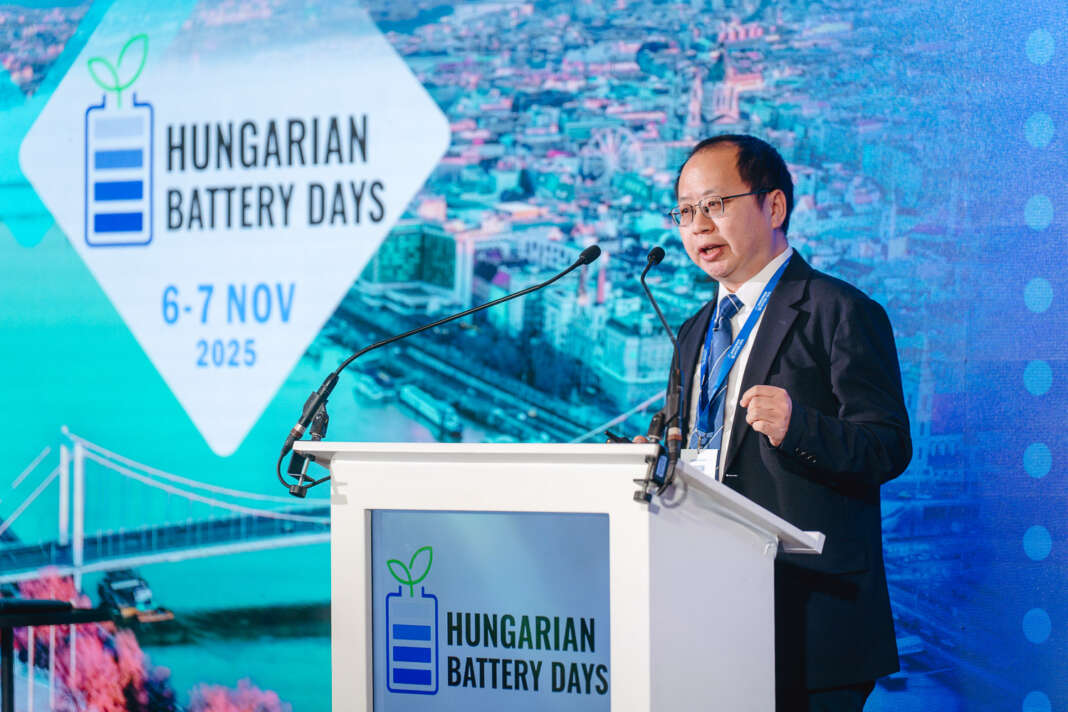
“Two things drive my research forward: the growing installation of renewables and the electrification of cooling and heating. I work on electrified thermal energy storage technologies to develop efficient and cost-effective solutions for end users, allowing them to use more renewable energy for heating and cooling,” summarised Professor Yongliang Li, who is a leading figure in thermal energy storage research, a professor at the University of Birmingham, and heads the Birmingham Centre for Energy Storage (BCES).
Electrified thermal energy storage (ETES) is an emerging class of technologies that convert and store electricity as thermal energy for later use in heating and cooling applications. By exploiting periods of abundant, low-carbon renewable electricity, ETES can decarbonise heat provision while simultaneously improving grid flexibility, resilience, and energy security. CEENERGYNEWS spoke with the Professor about his research and the latest developments in this area.
A more efficient cooling solution
One of these, developed with his research team under the UK EPSRC project, is a new approach to producing gas hydrates and an innovative cooling solution. “Gas hydrate is like ice, but with a higher melting temperature, making it a very efficient way to store cold. It is water-based crystalline solid in which gas molecules are physically encapsulated within cages formed by hydrogen-bonded water molecules, and has a higher energy density than ice,” he explains.
“Using this technology, we can generate and store cooling energy during the night very efficiently, when the ambient temperature is lower, as well as the electricity demand. So we can benefit from cooler conditions and cheaper electricity for cooling energy production to cover peak cooling demand during the day, when temperatures are high, and electricity is expensive.”
The technology also delivers a secondary effect. “It can minimise the required refrigeration capacity of the system, so we can use a smaller compressor to meet demand. This is because conventional refrigeration systems are typically sized to meet peak cooling demand under the highest ambient temperatures, when system efficiency is lowest. In contrast, storage-integrated refrigeration systems make maximum use of spare capacity during periods of low demand and low ambient temperature, allowing the installed refrigeration capacity to be reduced and thereby lowering both capital and operating costs.” Professor Yongliang Li adds.
The Professor and his research group invented a new technology to produce a CO2 gas hydrate, along with a methodology to integrate it into a conventional CO2 refrigeration system. They demonstrated this technology at lab scale, and are working with a UK company to develop a fully integrated system for demonstration at a practical scale.

The advantages of electrified thermochemical energy storage
He also highlights a second example of the technology: using electricity to power a reversible thermochemical reaction, such as hydration–dehydration, to produce and store heat when electricity is cheapest or would otherwise be curtailed or wasted.
“Typically, a simple way to store heat is through sensible or latent heat storage. Sensible storage works like a hot water tank: you heat the water to a higher temperature, and the heat is stored. Latent heat storage, like melting ice, works by heating or cooling the material to a temperature above (or below) ambient, while the required temperature difference is typically much smaller than in sensible heat storage. In both cases, the process relies on a temperature difference, which inevitably leads to some heat loss. For short-term storage, such as a few hours or a day, the loss is minimal. However, for long-term storage, say, over a month, water stored at 90 degrees may drop to 30 degrees, resulting in significant heat loss. However, thermochemical storage behaves more like a fuel: it is triggered by a chemical reaction, so there is no loss during storage, offering higher energy density and long-term storage capability.”
Electric cars in cold weather – a smart heating solution
The second technology has a different approach, as the Professor points out. “We can integrate various power-to-heat technologies with different thermochemical working pairs. For example, we integrate microwave heating with hydration-dehydration reactions.” Based on this, they invented a new technology called e-thermal bank, for which the first patent has been approved and the second is pending.
“The problem is that for electric vehicles, very cold ambient temperature becomes quite challenging, compared to conventional combustion engine vehicles, where heat is a byproduct. But in electric vehicles, when the energy stored in batteries is used to drive the electric motor and propel the vehicle, there is very little waste heat available.”
“Not only do the passenger and the cabin have to be heated, but the battery also operates within the thermal comfort zone. When ambient temperature is low, battery performance drops, and a significant proportion of the stored energy must be used to maintain thermal comfort for the passenger, the cabin, and the battery pack,” Professor Yongliang Li highlights.
“That’s why in cold climates, drivers often experience “range anxiety”, as turning on the heating system can halve the driving range. We developed this technology to address this issue. Our idea is that in a conventional electric vehicle, there is only a single energy source: the battery pack. If we can introduce a more cost-effective and compact secondary energy source dedicated to heating, this could be a good solution.”
“The energy density of our e-thermal bank system is much higher than that of a battery. If a small proportion of the battery’s space and weight is replaced with the e-thermal bank system, in very cold weather, the unit can generate heat for the cabin while the battery is solely used to propel the vehicle. In this way, the reduction in driving range is minimised even under very cold conditions,” the Professor explains.
The revolution of the energy supply chain
He also believes that the technology holds broader potential. According to him, the combination of electric heating with thermochemical energy storage will play an increasingly important role, particularly as a solution for demand-side energy management. “I think the energy supply chain will be revolutionised step by step. Conventionally, we rely on a concentrated power supply system with very large-scale generation, where electricity is produced based on forecasts of end-user demand, and the grid and generators are responsible for reliable supply. This creates many debates, including for energy storage: should it be centralised or decentralised, and who should own it? The system is complex.”
“However, as we use more renewables, generation itself becomes increasingly decentralised. In this case, the end-user will play a greater role and take more responsibility in balancing generation and consumption. If the end-user has technology that can decouple electricity use from real-time demand, they can benefit by saving on energy bills and contributing to grid stability, reducing curtailment of renewable energy. This is why I believe electrified thermal energy storage and user-focused solutions are very promising for the future.”