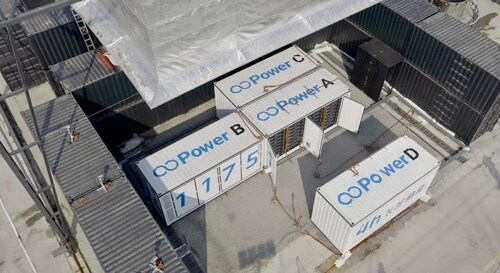
California-based Noon Energy has announced the successful operation of its first pilot system demonstrating ultra-long-duration energy storage (ultra-LDES) with more than 100 hours of capacity.
The pilot showcases a reversible solid oxide fuel cell battery and represents the first fully containerized, modular ultra-LDES system to be operated for thousands of hours, achieving more than 200 hours of energy storage capacity.
Noon Energy has developed a novel battery designed to deliver multi-day to seasonal energy storage. Each containerized unit provides 100 kW of power with over 100 hours of uninterrupted energy delivery. Thanks to its high energy density, the system occupies a significantly smaller footprint than other long-duration storage technologies, making it particularly well suited for space-constrained locations. According to the company, its footprint is 20 to 200 times smaller than flow batteries and pumped-hydro gravity storage systems, and two to three times smaller than lithium-ion batteries.
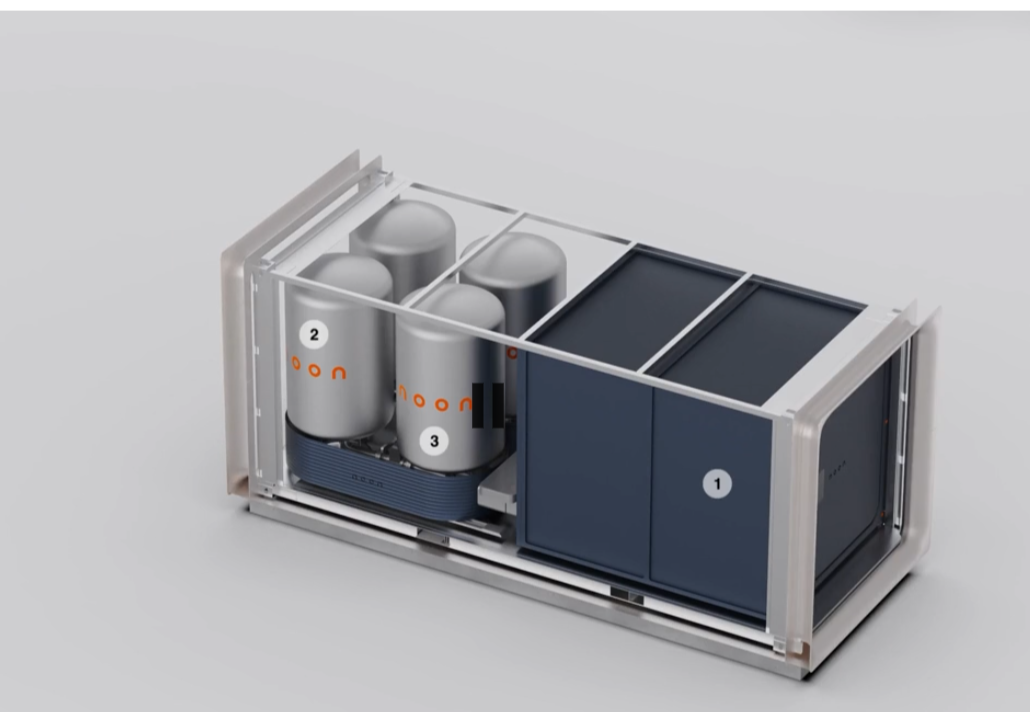
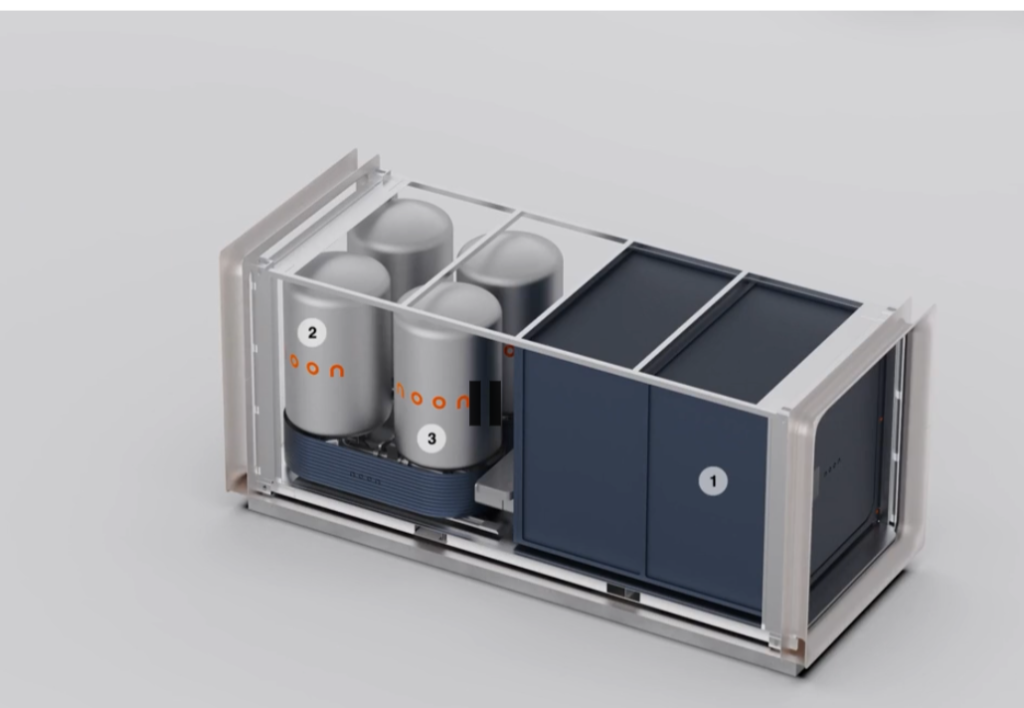
The system consists of a power block containing reversible solid oxide fuel cell technology that converts electricity into stored chemical energy and back again. It also includes a charge tank, which stores energy in carbon-based media during charging, and a discharge tank, which stores the converted energy storage media produced during discharge and holds it for the next charge cycle.
Noon Energy also emphasizes the cost efficiency of its solution. By allowing power capacity and energy capacity to scale independently – and by maintaining very low energy-storage costs – the system’s overall cost remains nearly flat as storage duration increases. This makes multi-day energy storage economically viable, the company claims.
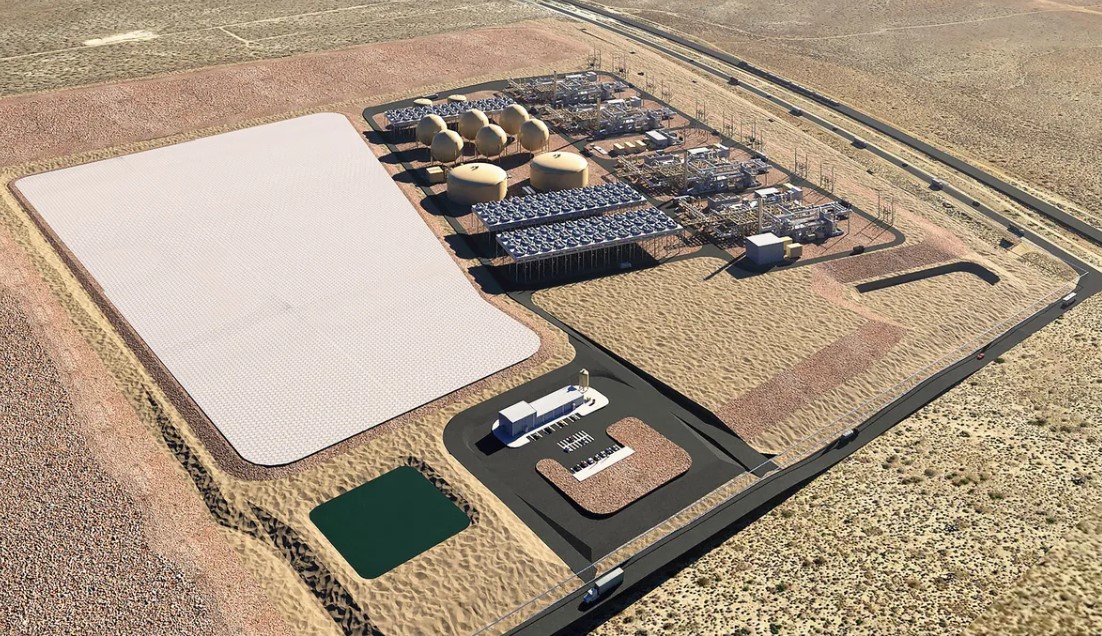
By adding inexpensive storage tanks and using naturally abundant storage materials, Noon Energy says it can affordably scale energy capacity across a wide range of applications, from small commercial installations to utility-scale projects. Its solution also relies on a domestic supply chain, using roughly 1% of the critical elements required by lithium-ion batteries, making it more resilient to geopolitical and supply-chain risks.
With data centers projected to consume up to 12% of total US electricity by 2028, Noon Energy positions its technology as an ideal complement to short-duration lithium-ion batteries. While lithium-ion systems typically provide two to ten hours of storage, the Noon battery offers up to 50 times more energy capacity. Combining the two technologies enables smooth power delivery, covers high-intensity demand spikes, and optimizes cost and performance – key factors for data centers competing in the AI era.
“We are excited to have commissioned our multi-module demonstration system and demonstrated its lifetime, thanks to the excellent work of our incredible engineering team,” said Chris Graves, co-founder and CEO of Noon Energy. “This is a key milestone in scaling up our breakthrough technology.”
The company’s first demonstration was supported by the California Energy Commission.
“We have also built an even larger, commercial-scale system that will be commissioned soon, with more details to come. Noon’s unique energy storage system enables low-cost, clean, firm power for hyperscalers and other industrial load growth, which represent an important part of our customer pipeline,” Graves added.