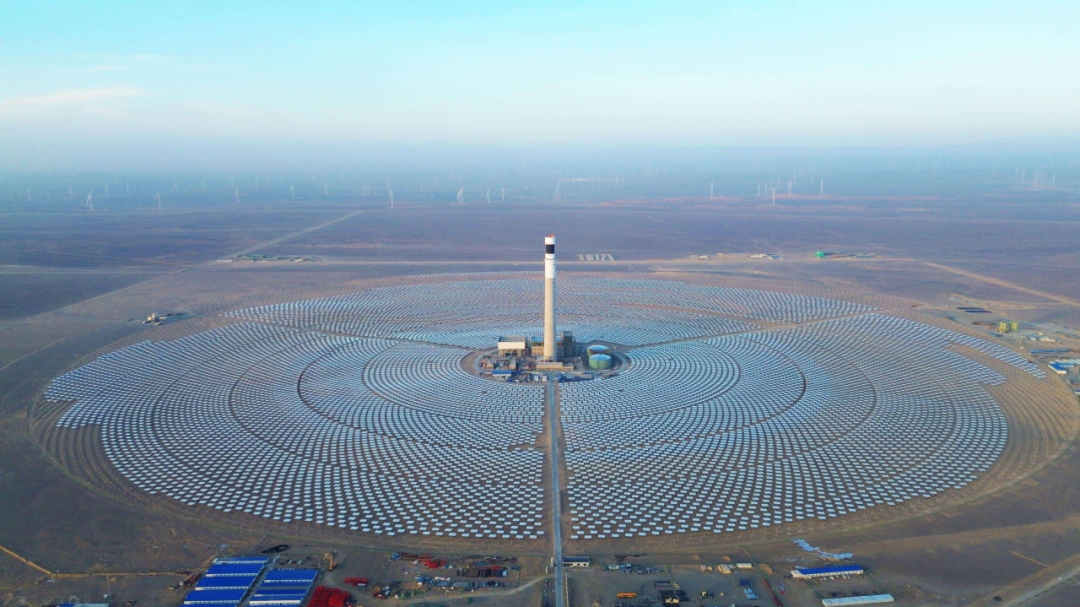
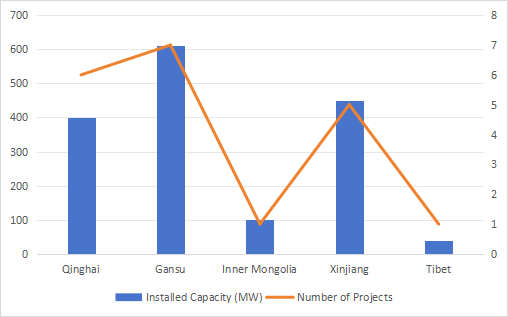
According to CSPPLAZA, China has successfully launched 21 commercial Concentrated Solar Power (CSP) projects, with a total installed capacity of 1,700 MW.
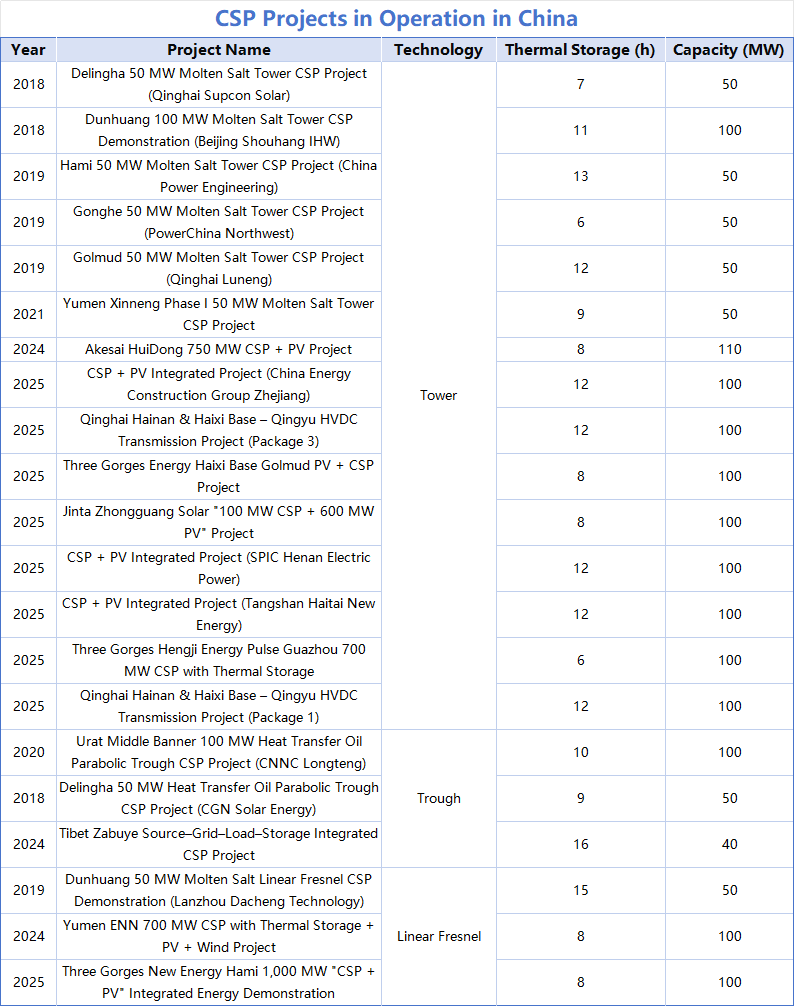
These projects are primarily located in regions such as Qinghai, Gansu, Xinjiang, Inner Mongolia, and Tibet, collectively contributing to over 2,600 MW of installed capacity. Among these regions, Gansu and Xinjiang lead in both the number of projects and installed capacity, followed closely by Qinghai, which has a significant number of projects.
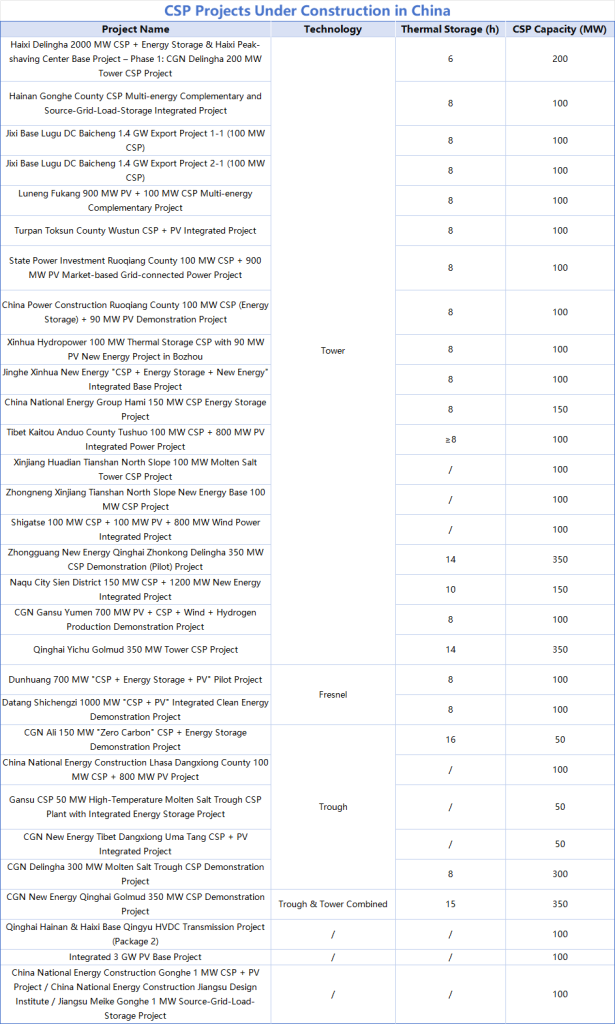
In addition to the operational projects, China also has a large pipeline of projects under construction. Currently, 30 CSP projects are under construction, with a total installed capacity of approximately 4 GW.
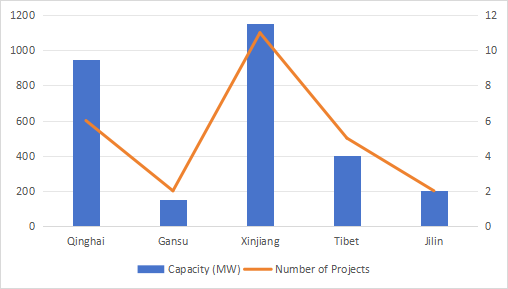
These projects are mainly located in solar-rich regions such as Qinghai, Xinjiang, Gansu, Tibet, and Jilin, contributing nearly 3 GW of installed capacity. Notably, Tibet has emerged as a promising new growth area, with 400 MW of CSP capacity under construction, second only to Xinjiang‘s 1,150 MW and Qinghai‘s 1,100 MW.
To further accelerate the development of CSP, China unveiled a comprehensive policy roadmap in December 2025, targeting 15 GW of installed capacity by 2030, with costs expected to be broadly competitive with those of coal-fired power. This roadmap, jointly issued by the National Development and Reform Commission and the National Energy Administration, emphasizes the need for extensive project construction and the expansion of application scenarios to enable the large-scale deployment of solar thermal power.
By 2030, China aims to develop the CSP sector into an internationally competitive new energy industry, characterized by globally leading technologies that are fully domestically controllable. The growth of the sector will be market-driven and industrialized, according to the roadmap. Over the years, China has made significant advancements in solar thermal technologies and built a leading industrial chain. The cost of construction has decreased dramatically, from approximately 30,000 yuan (around $4,253.9) per kilowatt a decade ago to about 15,000 yuan, while generation costs have also experienced a substantial reduction.