An MIT spinout has been developing thermal batteries to efficiently store excess electricity from utility grids and power producers, in a bid to solve one of clean energy’s biggest challenges.
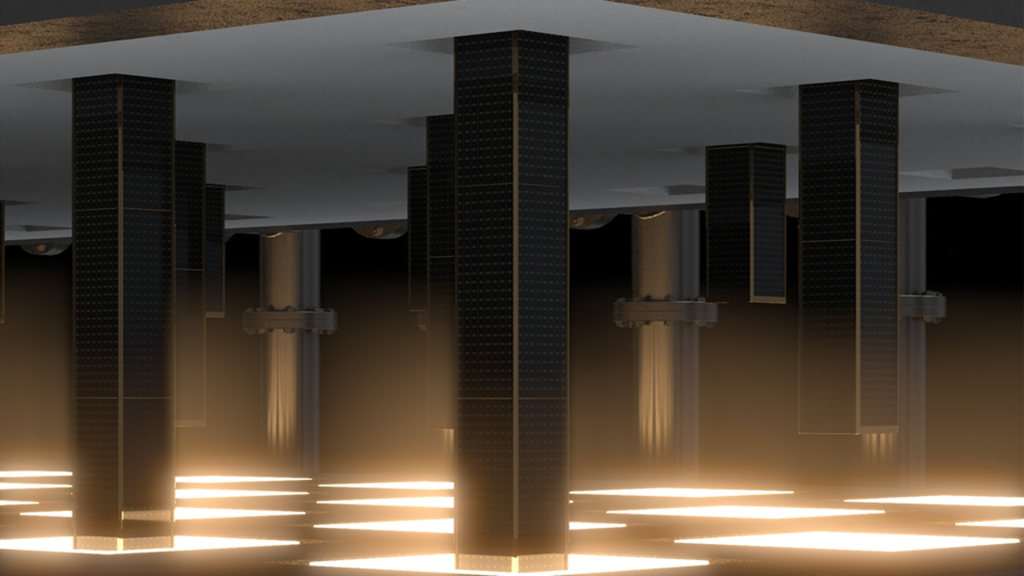
The new thermal battery can store electricity as heat inside massive carbon blocks heated to around 4,350 degrees Fahrenheit (2,400 degrees Celsius). This is nearly half the temperature of the Sun’s surface.
It was designed by Fourth Power, a thermal battery energy storage firm, launched by Asegun Henry, PhD, a heat transfer professor at MIT. The system can provide between 10 to over 100 hours of power at far lower cost than lithium-ion storage.
This positions it a potential alternative to lithium-ion (Li-ion) batteries for long-duration storage. “The idea was, instead of making the system from metal, let’s move liquid metals,” Henry said, explaining it uses molten tin to carry heat.
Storing energy as heat
The approach earned Henry a Guinness World Record for the hottest liquid pump in 2017. At such temperatures, doubling heat increases light output 16 times, or to the fourth power, which inspired the company’s name.
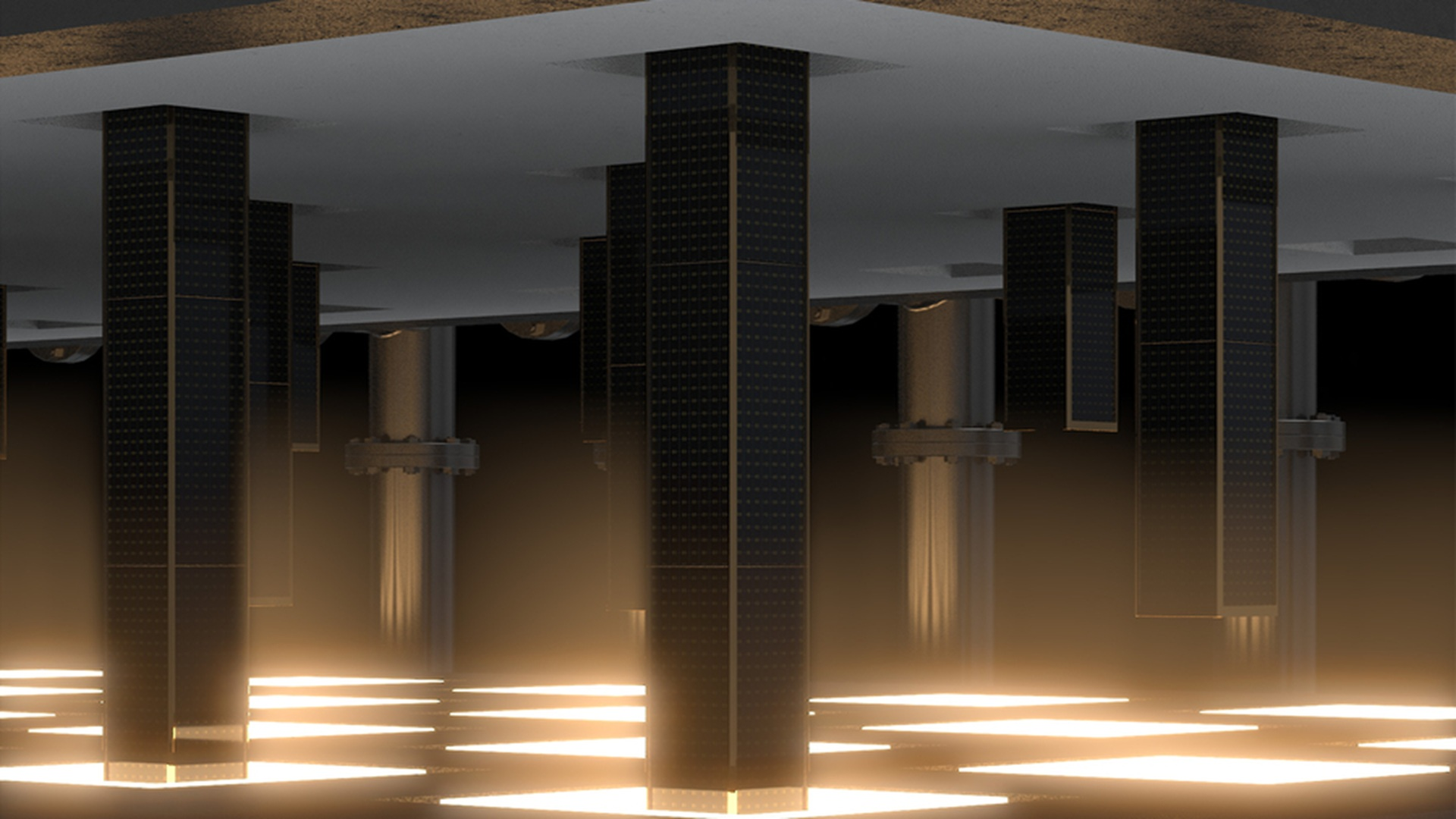
According to the team, the carbon blocks glow white-hot and emit intense light at peak charge. This light is then captured by thermophotovoltaic (TPV) cells, which function similarly to solar panels but are tuned to convert heat radiation into electricity.
The team broke another record when it proved that a TPV cell could convert light to electricity with an efficiency above 40 percent. Its defining advantage lies in its operating temperature.
“Explaining why our system is such a huge improvement over everything else centers around power density,” Henry pointed out. “We realized if you push the temperature higher, you will transfer heat at a higher rate and shrink the system.”
The professor added that higher temperatures ultimately drive costs down. “We operate our thermal battery between 1,900 and 2,400 degrees Celsius [3,452 and 4,352 degrees Fahrenheit], which allows us to save a tremendous amount on the balance of system costs,” he said.
Redefining energy storage
The method takes advantage of carbon-based materials’ durability. In contrast to metals, which become expensive and degrade at high temperatures, graphite can withstand extreme heat without corroding. Additionally, the molten tin is similarly stable and does not react with carbon.
This allows the unit to cycle repeatedly without significant wear. The battery loses only about one percent of stored heat per day, a trait which makes it fit for long-duration storage applications where energy must be held for extended periods.
Designed for utilities, renewables and data centers, the technology offers reliable backup as wind and solar continue to expand.
Henry said the battery’s modular design allows users to extend storage by adding more units. “Customers can buy one storage and one power module, and that’s a 10-hour battery,” he stated. “But if they want one power module and two storage modules, that’s a 20-hour battery.”
Later this year, the company plans to launch a one-megawatt-hour (MWh) demo system. A full-scale installation would offer 25 MW of power and 250 MWh of storage, and take up about half a football field.
The battery could also be utilized as a power plant or provide high-temperature industrial heat. “The world is waiting for something that’s much cheaper than lithium ion and just as reliable, if not better,” Henry concluded in a press release. “That’s what we’re focused on demonstrating to the world.”