Crusoe is making a major bet on energy storage to power its data centers, ordering 12 gigawatt-hours of long-duration batteries from Form Energy and expanding a second-life battery microgrid with Redwood Materials. The combined moves signal a push to lock in firm, lower-carbon electricity for power-hungry AI and cloud workloads while navigating grid constraints.
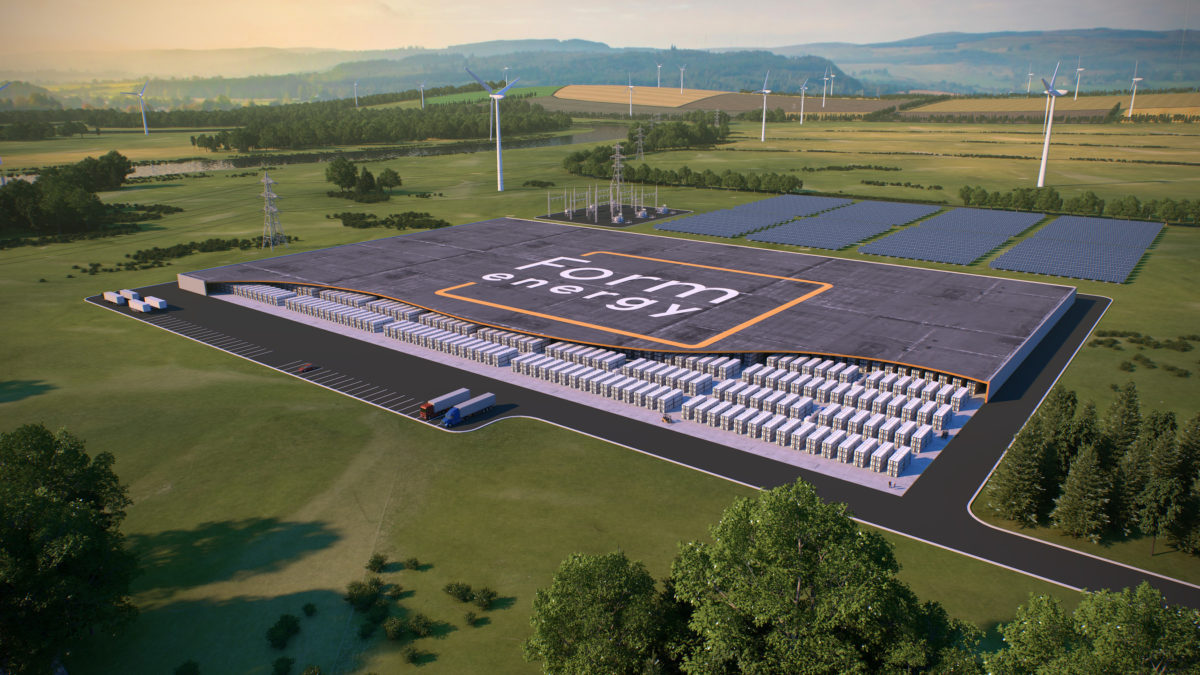
The Form Energy order centers on 100-hour iron-air batteries, a technology built for multi-day discharges rather than the four-hour windows typical of lithium-ion. Form did not disclose pricing, but a recently announced 30 gigawatt-hour project with Google in Minnesota was pegged at about $1 billion by The Information, implying Crusoe’s commitment likely lands in the hundreds of millions. Deliveries are slated to begin after Form’s manufacturing ramp.
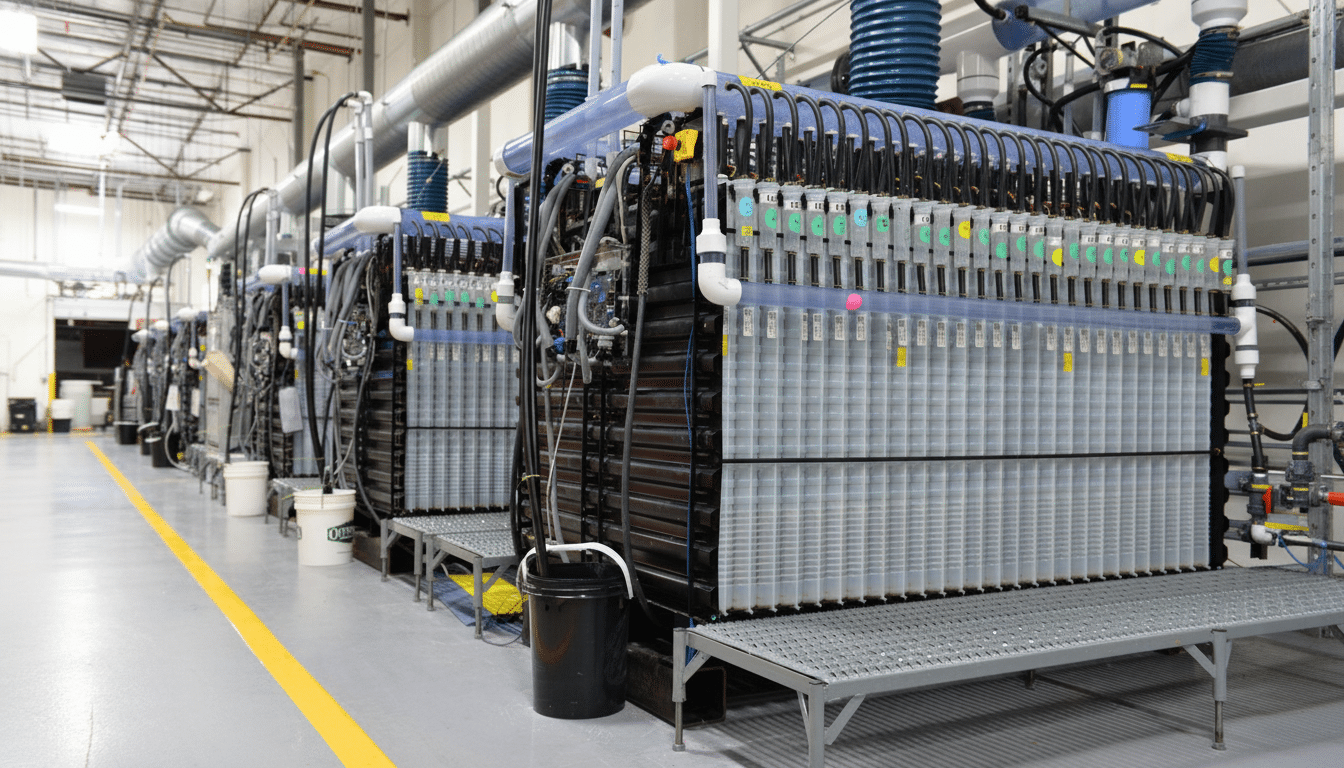
Form’s approach uses oxygen from the air to oxidize iron pellets inside each cell, producing electricity as the iron “rusts.” Charging reverses the process, stripping oxygen and restoring the iron. The chemistry swaps out expensive materials for abundant iron, trading some round-trip efficiency for dramatically lower cost at very long durations—precisely where lithium-ion economics falter.
Long-Duration Storage Anchors Crusoe’s Power Strategy
For a data center operator, 100-hour storage is more than backup. It can firm intermittent renewables through multi-day weather lulls, hedge against transmission congestion, and soak up surplus generation that might otherwise be curtailed. That combination can reduce reliance on diesel generators, unlock additional capacity at constrained grid nodes, and enable participation in capacity and ancillary service markets.
The deal lands as Form expands its first factory in West Virginia and pursues new financing. According to PitchBook, the company has raised $1.4 billion to date and is embarking on a $500 million round—capital that aligns with the scale of orders now materializing. If execution matches promise, iron-air systems could give large power users a cost-effective way to buy energy when it’s cheap and dispatch it when it’s scarce.
Second-Life Batteries Join the Microgrid Mix
Crusoe is also deepening its partnership with Redwood Materials, the recycling and reuse firm founded by former Tesla CTO J. B. Straubel. The company has been operating a 12 megawatt, 63 megawatt-hour second-life battery installation on a microgrid, which it described as the largest of its kind when commissioned. Redwood will add another 8 megawatts using repurposed EV packs, broadening the site’s ability to manage peaks and ride through grid disturbances.
Second-life systems offer a different value proposition than long-duration iron-air. While they can’t discharge for multiple days, repurposed EV batteries are well suited for high-cycling use cases—peak shaving, fast response, and frequency regulation—at attractive costs. They also advance circularity goals by extending pack lifetimes before eventual materials recovery. Real-world pilots, such as B2U Energy Storage’s EV-pack project in California, have shown that second-life assets can compete in wholesale markets when paired with robust monitoring and thermal management. Redwood’s deep supply relationships with automakers help ensure traceable, safety-compliant feedstock.
Why Data Centers Need Unusual Power Solutions
AI clusters can draw tens of megawatts per campus, with rising rack densities and liquid cooling pushing local infrastructure to the edge. At the same time, the U.S. interconnection queue for new generation and storage has swelled past 2,000 gigawatts, according to Lawrence Berkeley National Laboratory, with multi-year waits becoming common. That mismatch is nudging operators to build behind-the-meter resources that shape demand and guarantee uptime, rather than waiting on new wires and substations.
The International Energy Agency estimates that electricity use by data centers, AI, and crypto could roughly double within a few years to well over 600 terawatt-hours annually. As utilities scramble to meet that surge, multi-day storage paired with on-site microgrids offers a pragmatic bridge—turning volatile, low-cost clean power into dependable, around-the-clock supply for high-availability computing.
Crusoe is making a major bet on energy storage to power its data centers, ordering 12 gigawatt-hours of long-duration batteries from Form Energy and expanding a second-life battery microgrid with Redwood Materials. The combined moves signal a push to lock in firm, lower-carbon electricity for power-hungry AI and cloud workloads while navigating grid constraints.
The Form Energy order centers on 100-hour iron-air batteries, a technology built for multi-day discharges rather than the four-hour windows typical of lithium-ion. Form did not disclose pricing, but a recently announced 30 gigawatt-hour project with Google in Minnesota was pegged at about $1 billion by The Information, implying Crusoe’s commitment likely lands in the hundreds of millions. Deliveries are slated to begin after Form’s manufacturing ramp.
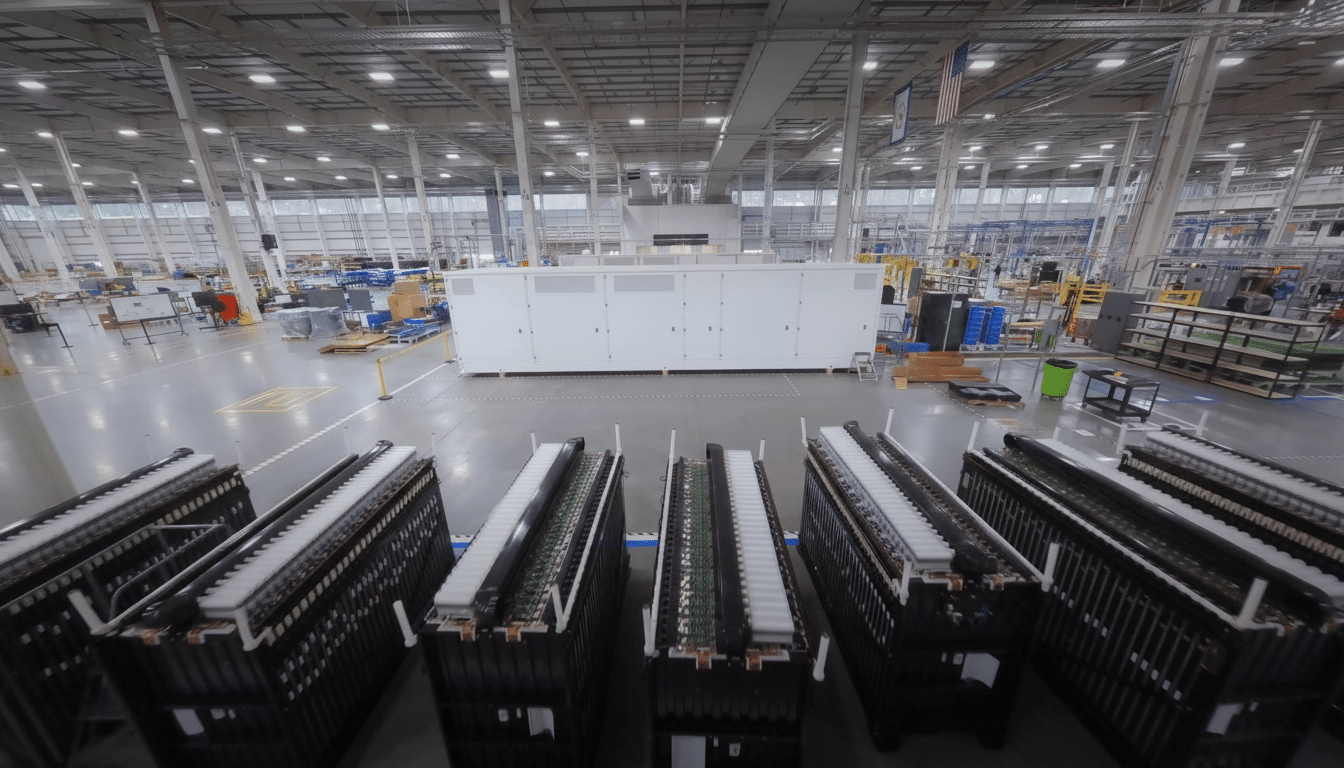
Form’s approach uses oxygen from the air to oxidize iron pellets inside each cell, producing electricity as the iron “rusts.” Charging reverses the process, stripping oxygen and restoring the iron. The chemistry swaps out expensive materials for abundant iron, trading some round-trip efficiency for dramatically lower cost at very long durations—precisely where lithium-ion economics falter.
Long-Duration Storage Anchors Crusoe’s Power Strategy
For a data center operator, 100-hour storage is more than backup. It can firm intermittent renewables through multi-day weather lulls, hedge against transmission congestion, and soak up surplus generation that might otherwise be curtailed. That combination can reduce reliance on diesel generators, unlock additional capacity at constrained grid nodes, and enable participation in capacity and ancillary service markets.
The deal lands as Form expands its first factory in West Virginia and pursues new financing. According to PitchBook, the company has raised $1.4 billion to date and is embarking on a $500 million round—capital that aligns with the scale of orders now materializing. If execution matches promise, iron-air systems could give large power users a cost-effective way to buy energy when it’s cheap and dispatch it when it’s scarce.
Second-Life Batteries Join the Microgrid Mix
Crusoe is also deepening its partnership with Redwood Materials, the recycling and reuse firm founded by former Tesla CTO J. B. Straubel. The company has been operating a 12 megawatt, 63 megawatt-hour second-life battery installation on a microgrid, which it described as the largest of its kind when commissioned. Redwood will add another 8 megawatts using repurposed EV packs, broadening the site’s ability to manage peaks and ride through grid disturbances.
Second-life systems offer a different value proposition than long-duration iron-air. While they can’t discharge for multiple days, repurposed EV batteries are well suited for high-cycling use cases—peak shaving, fast response, and frequency regulation—at attractive costs. They also advance circularity goals by extending pack lifetimes before eventual materials recovery. Real-world pilots, such as B2U Energy Storage’s EV-pack project in California, have shown that second-life assets can compete in wholesale markets when paired with robust monitoring and thermal management. Redwood’s deep supply relationships with automakers help ensure traceable, safety-compliant feedstock.
Why Data Centers Need Unusual Power Solutions
AI clusters can draw tens of megawatts per campus, with rising rack densities and liquid cooling pushing local infrastructure to the edge. At the same time, the U.S. interconnection queue for new generation and storage has swelled past 2,000 gigawatts, according to Lawrence Berkeley National Laboratory, with multi-year waits becoming common. That mismatch is nudging operators to build behind-the-meter resources that shape demand and guarantee uptime, rather than waiting on new wires and substations.
The International Energy Agency estimates that electricity use by data centers, AI, and crypto could roughly double within a few years to well over 600 terawatt-hours annually. As utilities scramble to meet that surge, multi-day storage paired with on-site microgrids offers a pragmatic bridge—turning volatile, low-cost clean power into dependable, around-the-clock supply for high-availability computing.
What to Watch Next for Data Center Energy Storage
Scale-up remains the test. Iron-air is new at commercial volumes, and stakeholders will watch round-trip efficiency, cycle life, and maintenance in real-world conditions. Lower efficiency than lithium-ion can be offset if energy is stored at very low marginal cost and sold when capacity value is highest—especially where curtailment is frequent and transmission is tight.
Policy tailwinds help. Standalone storage investment tax credits under recent climate legislation, plus emerging state procurements that reward longer durations, are improving project economics. Safety codes and performance standards for second-life packs are also maturing, which should accelerate deployments.
The takeaway: by blending multi-day iron-air storage with flexible second-life batteries, Crusoe is designing for both resilience and cost. If the approach delivers as advertised, expect more data center operators to follow suit as power constraints tighten and AI demand keeps climbing