Long-duration energy storage has so far struggled to earn a foothold in the conservative utility industry. The technology’s prospects seemed to worsen when the US government shifted support away from renewable energy projects.
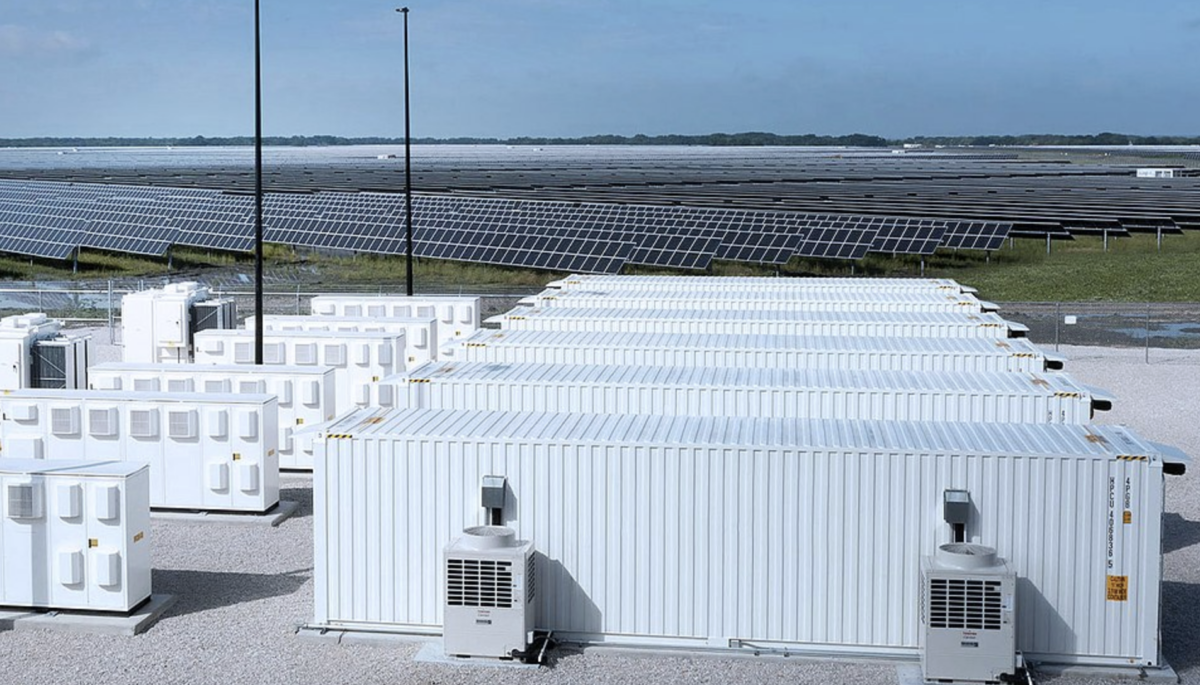
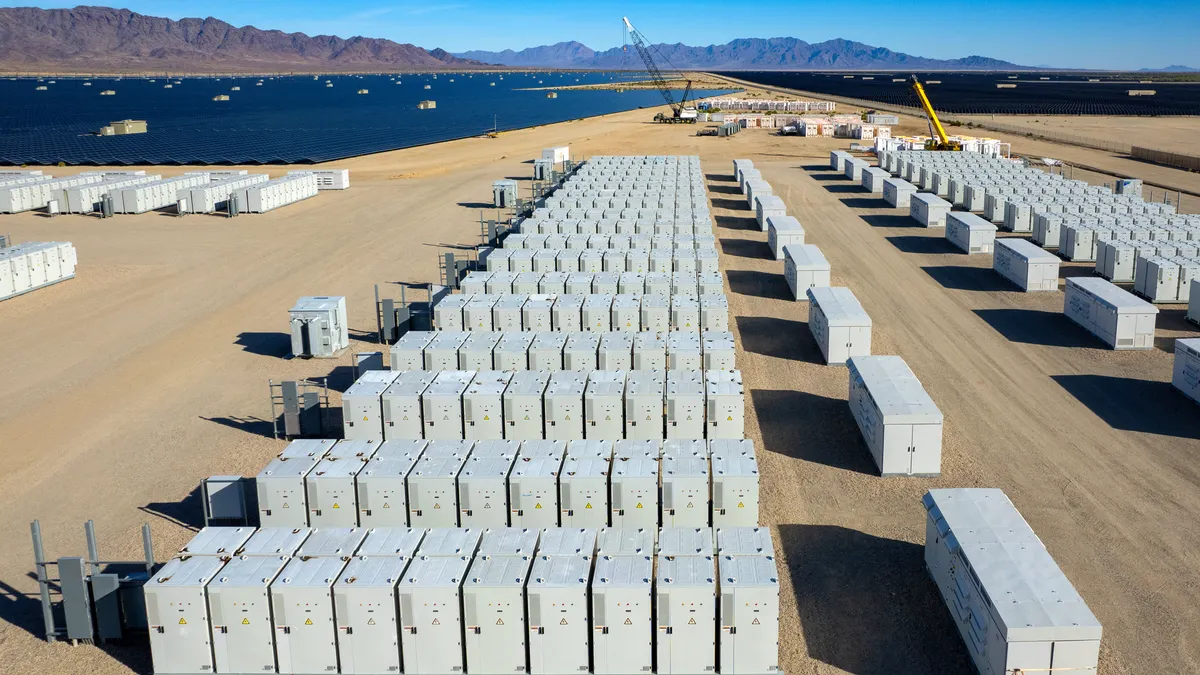
But the race to build data centers for artificial intelligence companies is offering a new niche for long-duration batteries. Connecting data centers to the grid comes with delays, and using renewable energy and companion storage batteries can help AI companies get electricity faster.
In March, Form Energy agreed to build iron-air batteries that could provide multiple days of electricity for Crusoe, a company that builds data centers for AI firms. Just a month earlier, Form revealed plans to install a multiday battery for a Google data center in Minnesota. It’s expected to be the world’s biggest battery by energy capacity.
Data centers are the fastest growing application for Eos Energy Enterprises’ zinc-based long-duration battery, company executives said on a February investor call. Data centers represented nearly a quarter of the company’s pipeline of projects last November, and that number continues to grow.
“The industry needs power, needs power quickly,” Eos CEO Joe Mastrangelo said on the call.
Other long-duration battery chemistries are also getting traction with data centers. Earlier this month, New Era Energy & Digital announced it’s considering Energy Dome’s carbon dioxide battery, which stores energy by converting CO2 from gas to liquid form, for a data center project in Texas. FlexBase Group will use a vanadium flow battery to help power its AI hub in Switzerland. Prometheus Hyperscale is testing XL Batteries’ organic flow battery at a data center and plans to buy more storage if the pilot succeeds.
A March report from the consulting firm Wood Mackenzie found that installations of long-duration energy storage systems reached 15 gigawatt-hours (GW h) in 2025, a nearly 50% increase over the previous year. Despite the progress, long-duration technologies accounted for only 6% of all energy storage installations last year, far behind lithium-ion batteries.
That’s because utilities already have programs to pay battery operators for the short-duration services that lithium-ion batteries provide, but few have developed strong mechanisms to pay long-duration battery operators to serve as backup capacity, says Kate Howling, president of Howling Engineering Resources, an energy-industry advisory firm.
The fact that batteries serving the electric grid need to frequently discharge electricity to earn money has been a major hurdle to the adoption of long-duration storage. But data center projects are proving to be an important source of early demand. “With data centers . . . there’s a need for speed,” Howling says.
The success of AI companies depends on their ability to build data centers quickly. In some cases, big data centers are delayed because the local utility isn’t ready to provide all the electricity the project demands, says Alexander Hogeveen Rutter, who researches long-duration storage for an investment arm of the renewable energy think tank RMI.
Regulations in some areas have been changing to allow industrial electricity users to move forward with projects if they can show they have enough of their own energy generation and storage capacity to avoid burdening the grid.
AI companies could generate this energy from natural gas, but orders for generators are backlogged, and prices are rising. Meanwhile, batteries capable of storing cheap renewable energy can be available much sooner, making them an appealing alternative when time is of the essence.
Hogeveen Rutter says the slow but steady march toward a renewable-powered electric grid remains the biggest opportunity for long-duration energy storage, but the growth of data centers now is providing a surge of momentum.
“If it gets me there faster, and it’s maybe marginally more expensive . . . that’s the option I’m going to go for,” he says.