Peaker plants are fossil fuel-powered, fast-ramping power plants that operate to cover peak electricity demand, often resulting in concentrated air pollution during high demand days. Limited grid capability also causes renewable power curtailment, or wasted energy. Long-duration energy storage offers a solution to California’s fossil-fuel peaker plant reliance by capturing surplus renewable electricity and deploying it when needed most.
California Peaker Plants Are Inefficient
On hot days, when electricity demand soars and blackout risk looms, California uses fossil fuel-powered “peaker plants” (also known as “peakers”) to keep the lights on. Peakers supplement continuously running baseload and intermediate plants.
Across California, almost 80 gas-fired power plants operate during peak demand periods. Although they operate for 2–7% of hours annually, in 2022 they generated 14.55 terawatt-hours—nearly 7% of California’s total supply. Peakers also typically have low capacity factors (under 15%), making them expensive, inefficient, and environmentally burdensome, disproportionately impacting nearby communities.
This inefficiency highlights an opportunity: replacing peakers with cleaner, cheaper, and more efficient solutions. While over half of California’s electricity generation comes from renewables, solar and wind intermittency leads to curtailment when generation exceeds demand.
Therefore, valuable renewable energy isn’t utilized while peak demand is fulfilled by fossil-based peakers. Energy storage poses a promising solution: combining renewable generation with energy storage could utilize overproduced power during low-demand periods to meet peak demand more flexibly and sustainably.
Peakers Disproportionately Operate on Polluted Days and Burden Disadvantaged Communities
Peakers disproportionately operate when air quality is already most dangerous. During the September 2022 heatwave, emissions from California’s gas plants spiked by 60% compared to baseline summer days, causing an estimated $12.3–$27.8 million in negative health impacts.
Additionally, nearly 50% of California’s peakers are located in communities disproportionately burdened by pollution, socioeconomic hardship, and health disparities, contributing to elevated rates of chronic conditions and costs. And their operation is maintained through capacity payments and standby contracts, raising energy costs for ratepayers, compounding the energy burden for low-income households.
The Case for Long-Duration Energy Storage
California’s peaker reliance undermines climate, public health, and equity goals. California established mandates for long-duration energy storage (LDES) to replace peakers for a cleaner, more resilient grid.
LDES systems, which store and deliver electricity for 10–12 hours or more, offer a cost-effective and reliable alternative. LDES systems store excess electricity when supply exceeds demand and discharges it when needed—covering evenings, multi-day renewable droughts, and other periods of grid stress.
While round-trip efficiency declines as storage duration increases, modeling demonstrates system-wide cost and reliability benefits outweigh these differences by reducing the need to overbuild short-duration batteries or renewables.
The cost premium for California’s zero-combustion pathways with LDES is lower compared to without, sometimes yielding savings. Moreover, LDES delivers higher effective load-carrying capability than short-duration batteries, increasing resource adequacy per megawatt.
With renewable expansion, the grid faces mismatches between times of energy production and need. LDES enables hourly matching of renewable supply with electricity demand, helping to flatten the load curve, reduce reliance on peakers, and minimize renewable curtailment.
To support clean energy goals, California is replacing high-emitting peakers with battery storage. In 2021, the state became the first to require utilities to procure 1,000 megawatts (MW) of non-weather-dependent, zero-emission LDES to strengthen grid reliability.
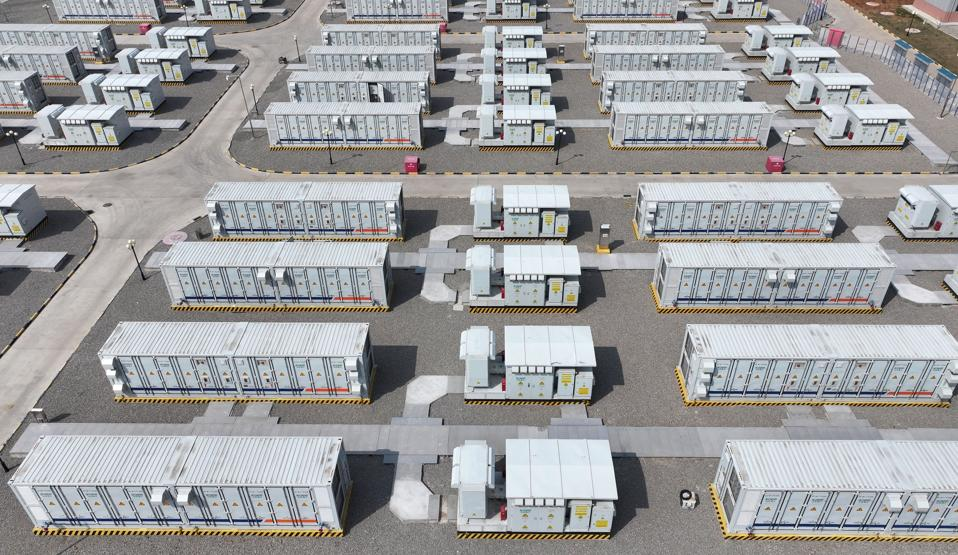
Additionally, the California Public Utilities Commission (CPUC) will solicit up to 2,000 MW of LDES between 2031 and 2037, with durations of at least 12 hours and multi-day capabilities. AES Alamitos Battery Energy Storage System was the first U.S. standalone battery storage system procured to replace a gas-powered peaker, providing 100 MW of capacity and 400 MW hours of storage since 2021.
These examples highlight that storage technologies enable peaker retirement, strengthen grid resilience, support renewable integration, and advance California’s climate and equity goals.
LDES encompasses many technologies—chemical (hydrogen, ammonia fuels), electrochemical (batteries), mechanical (pumped hydro, gravity systems, compressed air), and thermal (molten salt, liquid air energy storage)—each offering its own benefits and drawbacks.
We recommend the following policy considerations for deploying LDES:
- Fund LDES research, development, demonstration, and deployment, including feasibility studies of deployment sites. State funding can bring LDES to real-world infrastructure by supporting pilot projects, identifying optimal sites, and reducing financial risks that slow adoption.
- Mandate procurement of LDES capacity by the California Independent System Operator (CAISO) and the CPUC. Requiring these agencies to procure LDES creates steady demand, which brings more projects online and improves reliability during peak demand.
- Create performance-based incentives for grid operators. Paying operators for results—like reducing renewable curtailment or cutting peak-time pollution—encourages deployment when it delivers the most public benefit.
- Prioritize workforce development and cost relief in disadvantaged communities affected by peakers. Training programs and bill assistance ensure that these communities directly benefit–through jobs, lower costs, and cleaner air.